
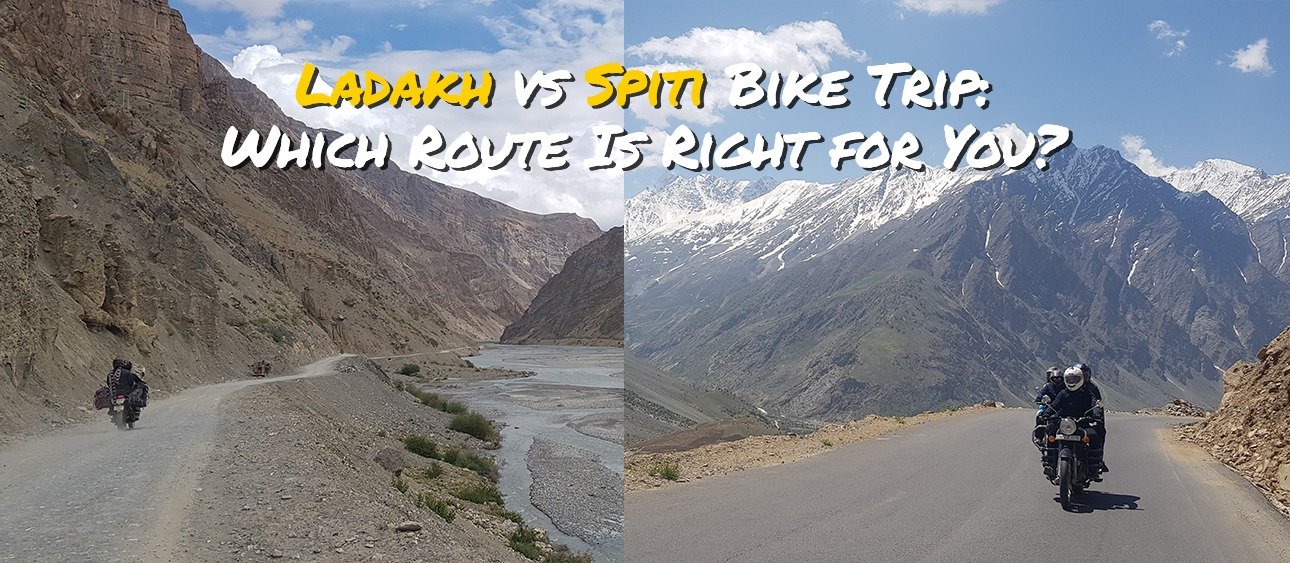
Ask any adventure rider in India to name the Himalayan routes they most want to ride, and Ladakh and Spiti Valley will almost always come up. Both have huge mountain scenery, tough roads and the kind of riding you remember for years. Still, they feel very different on the ground. Which one suits you depends on how you like to ride, how much experience you have and what you expect from the trip.
If you’re stuck deciding on a Ladakh vs Spiti bike trip, this comparison breaks down what sets each place apart and which one belongs at the top of your riding list.
1. Landscapes and Riding Experience
Ladakh is known for its dramatic mountain passes, wide open valleys, clear lakes and high-altitude desert. Most riders head for Khardung La, Nubra Valley, Pangong Lake and Tso Moriri. You get big views the whole way, on roads that switch between smooth highways and tough mountain stretches.
Spiti Valley feels more remote and rugged. Here you’ll ride past bare mountains, old monasteries and traditional Himalayan villages, often on narrow mountain roads. Kaza, Dhankar, Tabo and Langza are the stops that stay with most riders long after the trip.
Verdict: Pick Ladakh for the iconic mountain scenery. Pick Spiti if you’d rather have a quieter, more remote ride.
2. Road Conditions and Riding Difficulty
On the main tourist circuits, Ladakh’s roads are usually better built and better connected. That doesn’t make it easy. High passes and sudden weather changes can test you, and some routes throw in rough patches, water crossings and road conditions you can’t predict.
A Spiti Valley bike trip can be harder in places, especially near remote villages and on the narrow mountain sections. You’ll deal with loose gravel and rocky surfaces, and facilities are few and far apart. So ride carefully and plan your route well.
Verdict: If you’ve done some touring before, Ladakh is usually the easier of the two. Spiti asks more of you on its less-developed stretches.
3. Best Time to Plan Your Ride
When to go depends on which route you pick.
Ladakh: Most riders go between June and September, when the major mountain routes are easier to reach.
Spiti Valley: June to September is the popular window here too. Some lower-altitude routes stay open longer, depending on the weather and the state of the roads.
Check the latest road conditions before you leave. Weather in the mountains can turn fast.
4. Budget and Travel Duration
A Ladakh motorcycle tour can cost a little more, especially if you’re covering several destinations, sorting out permits, renting a bike or booking organised stays.
Spiti tends to be easier on the wallet, more so if you stay in homestays and small local guesthouses. That said, what you actually spend will depend on where you start, which motorcycle you ride, your route and how you like to travel.
For either trip, plan on about 7 to 12 days at a comfortable pace. Keep some extra time aside for acclimatisation and the delays that mountain travel tends to bring.
5. Which Destination Is Better for Your Riding Style?
In the end, the Ladakh vs Spiti bike trip question comes down to the kind of adventure you want.
Choose Ladakh if you want to ride the famous passes, take in the vast landscapes and cover well-known motorcycle routes. A Ladakh motorcycle tour makes a good first major Himalayan bike trip, as long as you’re prepared for riding at high altitude.
Choose Spiti if remote villages, tough terrain, calm surroundings and an offbeat route sound more like you. A Spiti Valley bike trip is especially rewarding for riders who like getting away from the usual tourist trail.
Final Verdict: Ladakh or Spiti?
There’s no single winner in a Ladakh vs Spiti bike trip. Ladakh gives you the classic Himalayan adventure, while Spiti offers a rawer, more remote ride.
If big passes and famous landmarks are what you’re after, go with Ladakh. If quiet villages and rough mountain roads sound more exciting, Spiti could be the better fit.
Whichever route you pick, get your motorcycle ready, learn what the terrain is like and give yourself enough time to enjoy the ride. The best Himalayan bike trip is the one that suits the way you like to ride.
Frequently Asked Questions
1. Do you need a special permit for a motorcycle trip to Ladakh or Spiti Valley?
Indian tourists usually don’t need a special permit for most Spiti routes, though some restricted or border areas do require one. Ladakh also has permit rules for certain protected areas. Check the latest local regulations before you travel.
2. How many kilometres should you ride per day on a Himalayan motorcycle trip?
On a Himalayan bike trip, 100 to 150 km a day is a sensible target on tough roads. Terrain, altitude and road conditions can turn even a short distance into several hours of riding.
3. Is a pillion ride recommended for Ladakh or Spiti Valley?
Yes but it is contingent upon your motorcycle and how much luggage you are carrying and how experienced you are. You’ll need a comfortable touring bike, properly packed luggage and enough riding experience to carry a pillion safely.
4. What should you do if you experience altitude sickness during a motorcycle trip?
Stop going higher, rest and avoid any further physical effort. If symptoms develop, head down to a lower altitude. Get medical help right away for severe signs like breathlessness at rest, confusion or trouble walking.